


PDF Ebook Mahatma Gandhi: Nonviolent Power in Action, by Dennis Dalton
By this way, you can be better to have spirit to read. The simple way to obtain, bring, and also take pleasure in analysis of this publication is also creating when getting it in soft documents. By saving in some tools, you are likely having greater than a book. So, make sure that you download as well as appreciate the Mahatma Gandhi: Nonviolent Power In Action, By Dennis Dalton to review. The link that we offer will certainly help you in eating the right book there.
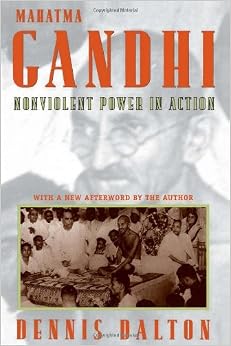
Mahatma Gandhi: Nonviolent Power in Action, by Dennis Dalton

PDF Ebook Mahatma Gandhi: Nonviolent Power in Action, by Dennis Dalton
Speaking about leisure activity, among the leisure activities that make a person effective is reading. Furthermore, checking out a high qualified publication. One that you could pick as the source is Mahatma Gandhi: Nonviolent Power In Action, By Dennis Dalton This is not sort of standard book that has terrific name. It is certain book that we actually advise you to read. By having leisure activity to review publications, you could always enhance your mind in all the time. And exactly what you can take currently in order to help you locate the responsible analysis material is this publication.
If you obtain the published book Mahatma Gandhi: Nonviolent Power In Action, By Dennis Dalton in on the internet book shop, you may also find the exact same trouble. So, you need to relocate shop to store Mahatma Gandhi: Nonviolent Power In Action, By Dennis Dalton and search for the offered there. Yet, it will not occur right here. Guide Mahatma Gandhi: Nonviolent Power In Action, By Dennis Dalton that we will provide right here is the soft file idea. This is exactly what make you could effortlessly discover and also get this Mahatma Gandhi: Nonviolent Power In Action, By Dennis Dalton by reading this site. We provide you Mahatma Gandhi: Nonviolent Power In Action, By Dennis Dalton the very best item, constantly and also consistently.
When obtaining the e-book Mahatma Gandhi: Nonviolent Power In Action, By Dennis Dalton by on the internet, you can review them wherever you are. Yeah, also you remain in the train, bus, hesitating listing, or various other areas, online publication Mahatma Gandhi: Nonviolent Power In Action, By Dennis Dalton could be your good pal. Whenever is a great time to check out. It will enhance your understanding, fun, enjoyable, lesson, and encounter without investing even more cash. This is why online publication Mahatma Gandhi: Nonviolent Power In Action, By Dennis Dalton ends up being most really wanted.
The author is really wise to pick the words to make use of in making this publication. The choices of words are essential to develop a publication. It will certainly be proper to check out by such particular cultures. Yet among the advances of this book is that this book is actually appropriate for each society. You could not be afraid to know nothing after reading this publication. Mahatma Gandhi: Nonviolent Power In Action, By Dennis Dalton can help you to discover many things after analysis.
Review
In this masterly analysis, Dalton shows how Gandhi's vision of a good life expressed itself in political action. Dalton has very wisely included what one seldom finds in books on Gandhi: examples of the trenchant criticism of his methods and his ideas that were made by Indian contemporaries. (Ainslie T. Embree, Columbia University)A beautiful, fine-grained piece of historical and textual research; cool, committed, and convincing in an intellectual terrain strewn with excessively passionate convictions. Dalton 'shows' rather than tells, through a meticulous examination of official speeches and administrative responses, the deep doubts about the legitimacy of their acts that Gandhi implanted in the minds of the highest and lowest British officials. Dalton also shows how the Mahatma's public enactment of self-sacrifice and renunciation demonstrated an efficacy not granted in conventional political acts within the context of religious viciousness and killing: lessons for Gandhi's era and ours. (Susanne Hoeber Rudolph, University of Chicago)The product of seasoned research and of several decades of teaching, reading, thinking, and acting on Gandhi's ideas. It is a rich stew, and a feast for those who appreciate careful scholarship and the continuing power of Gandhian thought.... Dalton's book helps to ensure that Gandhi's voice will be heard beyond this generation and this century, and well into the next. (Journal of Asian Studies)This is more than a biography or a political history. We are offered a penetrating analysis of Gandhian philosophy as revealed in his most individual operations. (English Historical Review)Sensitive, sympathetic, and lucid. (Economic and Political Weekly)[Dalton's] new approach to place Gandhi in the context of other major political and social leaders of India, and then assess him as a successful leader, appeared to enhance the methodology of this very well informed and analyzed book, which deserves a place in any good library in the world. (Modern Asian Studies)Represents the culmination of decades of research and study... which accounts for Dalton's sureness of touch, cogent handling of ideas, lucid prose, and effortless movement between theory and narrative.... Although it adds important new dimensions to the specialist's understanding of Gandhi, it can also serve as a readable and absorbing introduction to the man. (American Historical Review)Dalton eschews his canonization for a clear, thoughtful study. (Library Journal)Thoughtful and original. (New Statesman)"[Dalton's] valuable insight is that Gandhi's formation of himself as a leader represented a strategy of defense against fear and shame.... The broad scope of references and the command of detail on Indian politics and political theory that the work exhibits bear witness to long and thoughtful research. (Political Psychology)
Read more
About the Author
Dennis Dalton was the Ann Whitney Olin Professor of Political Science and is now emeritus at Barnard College, Columbia University. The winner of a Fulbright scholarship and grants from the American Council of Learned Societies and the American Philosophical Institute, he is the author of Indian Idea of Freedom: Political Thought of Swami Vivekananda, Aurobindo Ghose, Mahatma Gandhi, and Rabindranath Tagore and editor of Mahatma Gandhi: Selected Political Writings.
Read more
Product details
Paperback: 336 pages
Publisher: Columbia University Press; Reprint edition (February 21, 2012)
Language: English
ISBN-10: 0231159595
ISBN-13: 978-0231159593
Product Dimensions:
6 x 0.8 x 9 inches
Shipping Weight: 1 pounds (View shipping rates and policies)
Average Customer Review:
4.3 out of 5 stars
4 customer reviews
Amazon Best Sellers Rank:
#1,321,186 in Books (See Top 100 in Books)
Dennis Dalton has an extraordinary piece of scholarship here on Gandhi. It might be better suited for Gandhi experts, or at least those who have read a bit about Gandhi. This is not a biography. If you want that begin with Louis Fischer books on Gandhi. Dalton does contribute an exceptional analysis of Gandhi's nonviolent program, his commitment to "swaraj" or home rule, and all his political interests. Dalton also critiques and understands well the strength and limitations of nonviolence. This book is ideal for those interested in religion and politics, who preferably have at least some biographical knowledge of Gandhi. For example, having read the Fischer books, or Gandhi's "Autobiography" and his book "Hind Swaraj" would put you in a prime position to grasp Dalton's very fine work. Overall highly recommended for the hard core Gandhi enthusiast or scholar. Dalton's book concludes with an illuminating comparison and contrast of King, Malcolm X and Gandhi.
A cogent, informative review of Gandhi's life, thoughts, his influence, written by one of the world's best Gandhi scholars. HIs evenhandedness, and his values and who his as person shine through his lucid prose. This is a must read book for all Americans who value our rich history and are concerned about the path on which we are going.
Dalton presents the historical development of Gandhi's political thought, especially on nonviolence and satyagraha (nonviolent direct action). When read in combination with Joan Bondurant's "Conquest of Violence," one understands the key concepts and strategies of nonviolent action in the context of India's independence movement. Despite the attention to historical detail, the reader is left wondering just how nonviolence works and how it persuades rather than dominates the opponent. Dalton's comparison of Malcolm X and Gandhi enlightens the reader on the striking parallels in the development of their political thought under conditions of racist oppression. Both traveled the road from emulating the white oppressor, due to a sense of inferiority, to psychological liberation and resistance, violent versus nonviolent. M. L. King, Malcolm X and Gandhi all embraced the idea of "inclusiveness" encompassing both oppressor and oppressed. For a further treatment of this theme, see my book, "The Psychopolitics of Liberation: Political Consciousness from a Jungian Perspective" (Palgrave Macmillan, 2007). Lawrence Alschuler, Professor of Political Science.
I don't care to duplicate the academic praise seen in the above reviews. But I can tell you simply that Dennis Dalton was my professor in a class on Non-Violence at Columbia Univ. and it changed my life. At a period of time when I was an atheist, believing that all religion was just a set of rules to control people, D. Dalton demonstrated through the example of Ghandi that the Love and Truth force can be a powerful vehicle for change. This completely changed my view point from victim to activist. One could actually have spirituality from within, instead of imposed upon him or her from without. A tool, not a punishment. The 'truth' one has seems to be irrelevant; it is one's passion and belief and willingness to stand behind that Truth that triumphs. If it is True in the archetypal sense, others will join (not follow) you. And by direct action at the heart level, you can touch and change nations. This is not about passive resistance; this is about direct non-violent confrontation. It is about appealing to the best, the highest nature, of that which you confront. He showed me that one can change the world with one's heart; that truth can win. And now I just wait for Dennis to write the definative book on Emma Goldman... Truly a great teacher and initiator of the inner spark of one's own truth force. And with Ghandi as his guiding archetype, this book should be on the reading list of every activist.
Mahatma Gandhi: Nonviolent Power in Action, by Dennis Dalton PDF
Mahatma Gandhi: Nonviolent Power in Action, by Dennis Dalton EPub
Mahatma Gandhi: Nonviolent Power in Action, by Dennis Dalton Doc
Mahatma Gandhi: Nonviolent Power in Action, by Dennis Dalton iBooks
Mahatma Gandhi: Nonviolent Power in Action, by Dennis Dalton rtf
Mahatma Gandhi: Nonviolent Power in Action, by Dennis Dalton Mobipocket
Mahatma Gandhi: Nonviolent Power in Action, by Dennis Dalton Kindle


